
The Difference: Belief and Certainty
God alone possesses knowledge of the ghayb - the unseen, the future, all that lies beyond the reach of human perception:
[27:65] Say, "No one in the heavens and the earth knows the future except GOD. They do not even perceive when they will be resurrected."
This raises a question that deserves a serious answer: since we cannot see or verify the existence of God, the angels, or the Hereafter, is belief in them an act of blind faith? To answer this properly, two distinctions must be made - between blind faith and genuine belief, and between belief and certainty. These are not the same things, and confusing them has led many people either to dismiss faith as irrational or to accept it without the engagement God actually calls them toward.
Blind Faith vs. Genuine Belief
Blind faith is belief without justification - accepting a claim with no evidence, no reasoning, and no basis beyond the fact that one has been told to accept it. This is not what the Quran invites. The Quran consistently addresses people as rational beings capable of observation, reflection, and reasoned conclusion. It invites them to look at the signs around them and within themselves and to follow where the evidence leads:
[41:53] We will show them our proofs in the horizons, and within themselves, until they realize that this is the truth. Is your Lord not sufficient as a witness of all things?
The monotheistic instinct - the orientation toward a single Creator - is not an arbitrary cultural imposition. The Quran describes it as something planted in the human being's nature by God Himself:
[30:30] Therefore, you shall devote yourself to the religion of strict monotheism. Such is the natural instinct placed into the people by GOD. Such creation of GOD will never change. This is the perfect religion, but most people do not know.
Genuine belief in God is therefore grounded in two things working together: the natural orientation already present in every human being, and the evidence supplied by God's signs in the world. It is not credulity. It is the rational response to what the evidence actually shows.
Belief Without Seeing: The Example of Black Holes
The distinction between believing in something without seeing it and accepting something blindly without evidence is best illustrated by an example from science.
Black holes, by their very nature, emit no light. They cannot be directly observed. Yet from the moment Einstein's theory of general relativity predicted their existence in 1915, scientists believed in them - not blindly, but on the strength of observable evidence: gamma-ray bursts, gravitational waves, the behavior of stars being drawn and consumed by an invisible gravitational force. The signs pointed clearly to something real, even though the thing itself could not be seen. That belief was not irrational. It was the appropriate conclusion from available evidence.
It was not until April 2019 that the Event Horizon Telescope - a planet-scale array of ground-based radio telescopes - captured the first direct image of a supermassive black hole at the centre of the galaxy Messier 87. For over a century, the scientific community held a well-grounded belief. Then came certainty.
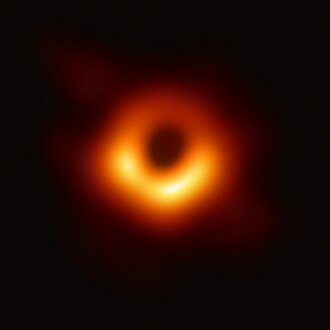
This is precisely the distinction the Quran draws between belief and certainty. Belief, properly understood, is not a leap in the dark. It is a reasoned orientation toward what the evidence indicates, held in the absence of direct sight. Certainty is what follows direct sight - or, for human beings who cannot see God during this life, what follows the witnessing of a miracle that places the matter beyond doubt.
The Prophets and the Pursuit of Certainty
Even among the most noble of God's prophets, belief and certainty were not the same state. The prophets believed - but some of them sought certainty, and God responded to that seeking not with rebuke but with demonstration.
Moses believed in God. Yet he asked to see Him:
[7:143] When Moses came at our appointed time, and his Lord spoke with him, he said, "My Lord, let me look and see You." He said, "You cannot see Me. Look at that mountain; if it stays in its place, then you can see Me." Then, when his Lord manifested Himself to the mountain, He caused it to crumble. Moses fell unconscious. When he came to, he said, "Be You glorified. I repent to You, and I am the first to believe."
Moses fell unconscious not from punishment but from the overwhelming reality of what he encountered. When he recovered, his words - "I am the first to believe" - mark the transition from belief to certainty. He had believed before. Now he knew.
Abraham believed in God. Yet he too sought a deeper assurance:
[2:260] Abraham said, "My Lord, show me how You revive the dead." He said, "Do you not believe?" He said, "Yes, but I wish to reassure my heart." He said, "Take four birds, cut them up, and place a piece on each hill. Then call them to you; they will come to you in a hurry. You should know that GOD is Almighty, Most Wise."
God's question to Abraham - "Do you not believe?" - is not a rebuke. It is an acknowledgment of what Abraham already held. Abraham's answer - "Yes, but I wish to reassure my heart" - is one of the most honest statements in the Quran. He was not doubting. He was seeking to move from a belief he already possessed to a certainty his heart yearned for. God granted it.
No human being may see God directly during this life - and so God grants certainty not through direct vision but through miracles that exceed human capacity to produce or explain. Moses and Abraham received those miracles. The signs they witnessed were not given to manufacture faith where none existed, but to elevate existing faith into certainty.
The Path to Certainty Today
For those living today, the same path remains open - not through personal miracles granted to individuals, but through one of God's greatest signs embedded in the Quran itself.
[74:30] Over it is nineteen.
[74:31] We appointed angels to be guardians of Hell, and we assigned their number (19) (1) to disturb the disbelievers, (2) to convince the Christians and Jews (that this is a divine scripture), (3) to strengthen the faith of the faithful, (4) to remove all traces of doubt from the hearts of Christians, Jews, as well as the believers, and (5) to expose those who harbor doubt in their hearts, and the disbelievers; they will say, "What did GOD mean by this allegory?" GOD thus sends astray whomever He wills, and guides whomever He wills. None knows the soldiers of your Lord except He. This is a reminder for the people.
[74:35] This is one of the great miracles.
The mathematical structure of the Quran - built on the prime number 19 in a way that pervades its construction at the level of letters, words, verses, and chapters - is described in these verses as serving specific purposes. Among them: to bring those who already have scripture to certainty, to increase the faith of believers, and to remove doubt from both groups. The miracle is not offered as an argument to the hostile - those with sickness in their hearts will not be moved by it (2:10). It is offered to the sincere - those who believe and wish to move, as Abraham did, from belief to a heart that is reassured.
[41:53] We will show them our proofs in the horizons, and within themselves, until they realize that this is the truth. Is your Lord not sufficient as a witness of all things?
God's signs are not hidden. They are placed in the fabric of the world and in the structure of His own Book for those willing to look. Belief that has witnessed those signs is not blind faith - it is the most rationally grounded position available to a human being who cannot yet see what awaits beyond this life. And for those whose hearts respond to the signs with openness rather than resistance, that belief can move, as it did for Moses and Abraham, into something more settled and more certain.