
Becca (3:96)?
Why Two Names for the Same Location?
The Quran refers to the most sacred site in Islam by two different names: Mecca (مَكَّةَ) and Becca (بِبَكَّةَ). To a reader encountering this for the first time, this might seem like an inconsistency. It is not. It is a deliberate and meaningful feature of the text - one whose significance extends beyond linguistics into history, scripture, and the mathematical structure of the Quran itself.
The Quranic Evidence
The name Becca appears in 3:96, where God identifies it as the location of the first and most important shrine established for humanity:
[3:96] The most important shrine established for the people is the one in Becca; a blessed beacon for all the people.
[3:97] In it are clear signs: the station of Abraham. Anyone who enters it shall be granted safe passage. The people owe it to God that they shall observe Hajj to this shrine, when they can afford it.
The reference to the station of Abraham in the very next verse confirms that this is not a generic or symbolic location - it is the specific physical site of the Sacred Masjid in what is today known as Mecca. That Becca and Mecca are the same place is further confirmed in 48:24-25, which describes events in the valley of Mecca connected directly to the Sacred Masjid and the Hajj pilgrimage:
[48:24-25] He is the One who withheld their hands of aggression against you, and withheld your hands of aggression against them in the valley of Mecca, after He had granted you victory over them. It is they who disbelieved and barred you from the Sacred Masjid, and even prevented your offerings from reaching their destination.
And 2:196 establishes that there is one destination for Hajj - the Sacred Masjid. If Becca and Mecca were two different places, the Hajj verses would be in irreconcilable contradiction with one another. They are not. The Quran is consistent: Becca and Mecca are one location, referred to by two names.
It is also worth noting that Rashad Khalifa observed in his footnote to 3:96 that the use of the name Becca rather than Mecca in that verse is not arbitrary - it serves the mathematical structure of the Quran. Chapter 3 is one of the initialed chapters whose letter count is governed by the number 19. Had the more common spelling Mecca been used, it would have altered the frequency of the letter M in the chapter in a way that would have disrupted the mathematical design. The spelling Becca is therefore both historically accurate and mathematically precise - a convergence that is characteristic of the Quran.
A Pattern Throughout the Quran
The use of two names for the same location is not unique to Mecca and Becca. The Quran does this consistently for several locations and figures:
For locations: Medina (9:120) and Yathrib (33:13) refer to the same city. Thamud (11:67) and Al-Hijr (15:80) refer to the same people and their land. The people of Ad are also referred to in connection with Erum (89:7) and the Dunes (46:21).
For people: Jacob (2:133) and Israel (2:40) are the same patriarch. Iblees (7:11) and Satan (2:34) refer to the same being. Jonah (10:98) and Zan-Noon - the one with the N in his name - (21:87) are the same prophet.
This is a recognized and consistent feature of Quranic expression, not an error or inconsistency. Names carry different connotations, reflect different historical periods, or serve different textual and structural functions. The Quran uses them with precision.
The Biblical Confirmation: Psalm 84
What makes the Becca-Mecca identification particularly remarkable is that it did not disappear from the Bible entirely. When certain scholars attempted to remove references to Mecca, Hajj, and the religious practices they associated with Arab Muslims from the Biblical text, they succeeded in removing the name Mecca - but they did not realize that the ancient name Becca referred to the same place. It survived intact in Psalm 84:
Blessed are those whose strength is in you, whose hearts are set on pilgrimage. As they pass through the Valley of Becca, they make it a spring; the autumn rains also cover it with pools. (Psalm 84:5-6)
Several elements of this passage demand attention.
First, the context is explicitly one of pilgrimage. Verse 5 speaks of those whose hearts are set on pilgrimage, and verse 6 describes their passage through the Valley of Becca as part of that journey. The Quran uses the exact same name for the exact same location in the context of the exact same religious obligation - Hajj. The convergence is not coincidental.
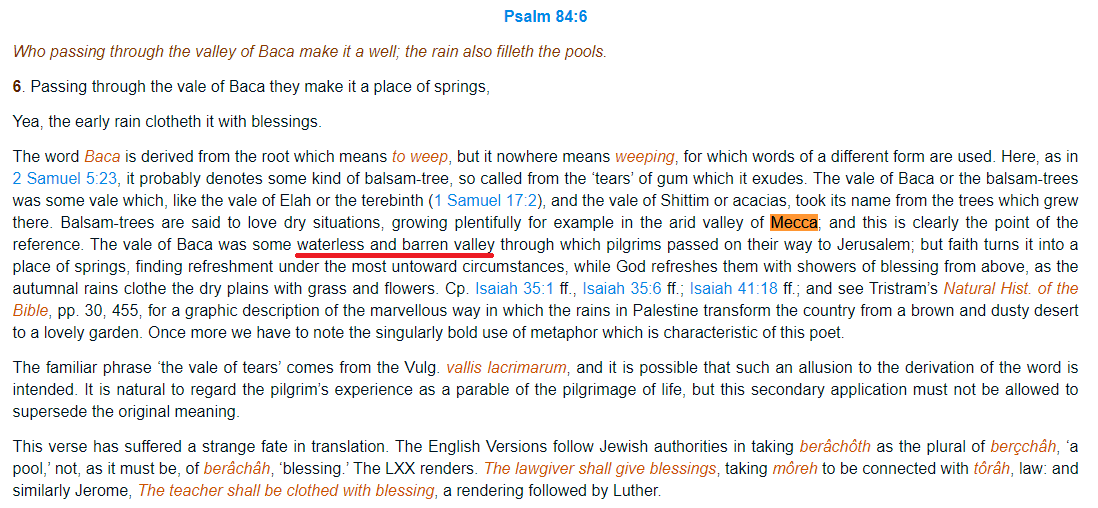
Second, the geography described matches Mecca precisely. The Valley of Becca is described as arid, waterless, and barren - a desert valley. This is an accurate description of the valley of Mecca. Bible scholarship has noted this directly: balsam trees, from which the name Becca may derive due to the tears of gum they exude, are said to grow plentifully in the arid valley of Mecca. The geography of the psalm points to the same location the Quran names.
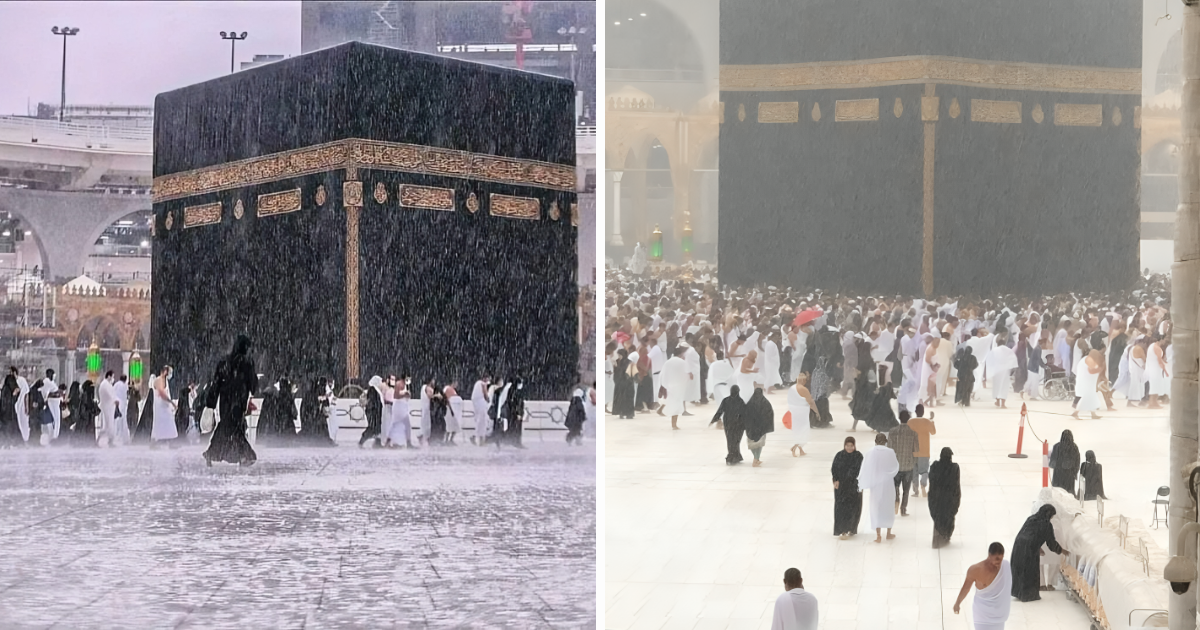
Third, the spring. Several translations of Psalm 84:6 render the Hebrew as "a place of springs" - but the Hebrew word for spring in this verse is singular, not plural. A single spring in an arid desert valley that serves as a site of pilgrimage: this corresponds precisely to the Zamzam well in Mecca, the singular water source that has sustained the Sacred Masjid and its pilgrims since the time of Hagar and Ishmael. The footnote in some Bible translations acknowledges the alternative rendering: "blessings" - which aligns even more closely with the Quranic description of Becca in 3:96 as "abounding in blessings."
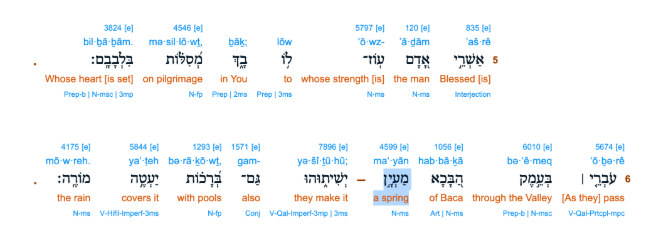
The Hebrew linguistic scholarship around this passage is worth noting. The word Becca derives from a root meaning to weep - likely a reference to the tears of gum exuded by the balsam tree that gives the valley its name. Bible commentators have long identified the Valley of Becca as a barren, waterless valley through which pilgrims passed. What they have not always acknowledged is that this description - desert valley, single spring, site of pilgrimage - points not toward Jerusalem, but toward Mecca.
The Jewish Encyclopedia on Becca
For further insight, the Jewish Encyclopedia itself identifies this very location as Mecca. The following excerpts are from Volume 2:
Page 415 (p. 461 in PDF):
"BACA, THE VALLEY OF: A valley mentioned in Ps. lxxxiv. 7 [6 A.V.]. Since it is there said that pilgrims transform the valley into a land of wells, the old translators gave to 'Baca' the meaning of a 'valley of weeping'; but it signifies rather any valley lacking water. Support for this latter view is to be found in II Sam. v. 23 et seq.; I Chron. xiv. 14 et seq., in which the plural form of the same word designates a tree similar to the balsam-tree; and it was supposed that a dry valley could be named after this tree. König takes 'Baca' from the Arabian 'baka'a,' and translates it 'lacking in streams.' The Psalmist apparently has in mind a particular valley whose natural condition led him to adopt its name."
Page 476 (p. 526 in PDF):
"BALSAM: Word used as the translation (R.V., margin) of the Hebrew... An aromatic gum or spice, probably the product of a Balsam tree or plant. The Balsam tree of Jericho is noted among ancient writers - Theophrastus, Strabo, Pliny - for its medicinal and highly agreeable aromatic qualities. The so-called Mecca Balsam is generally conceded to be the product of the Balsamoclenron opobalsamum. It is reported that the Balsam has disappeared from Jericho."
The Arabic Holy Bible Dictionary
In the Arabic Holy Bible Dictionary, we find the following entry for the Valley of Becca:
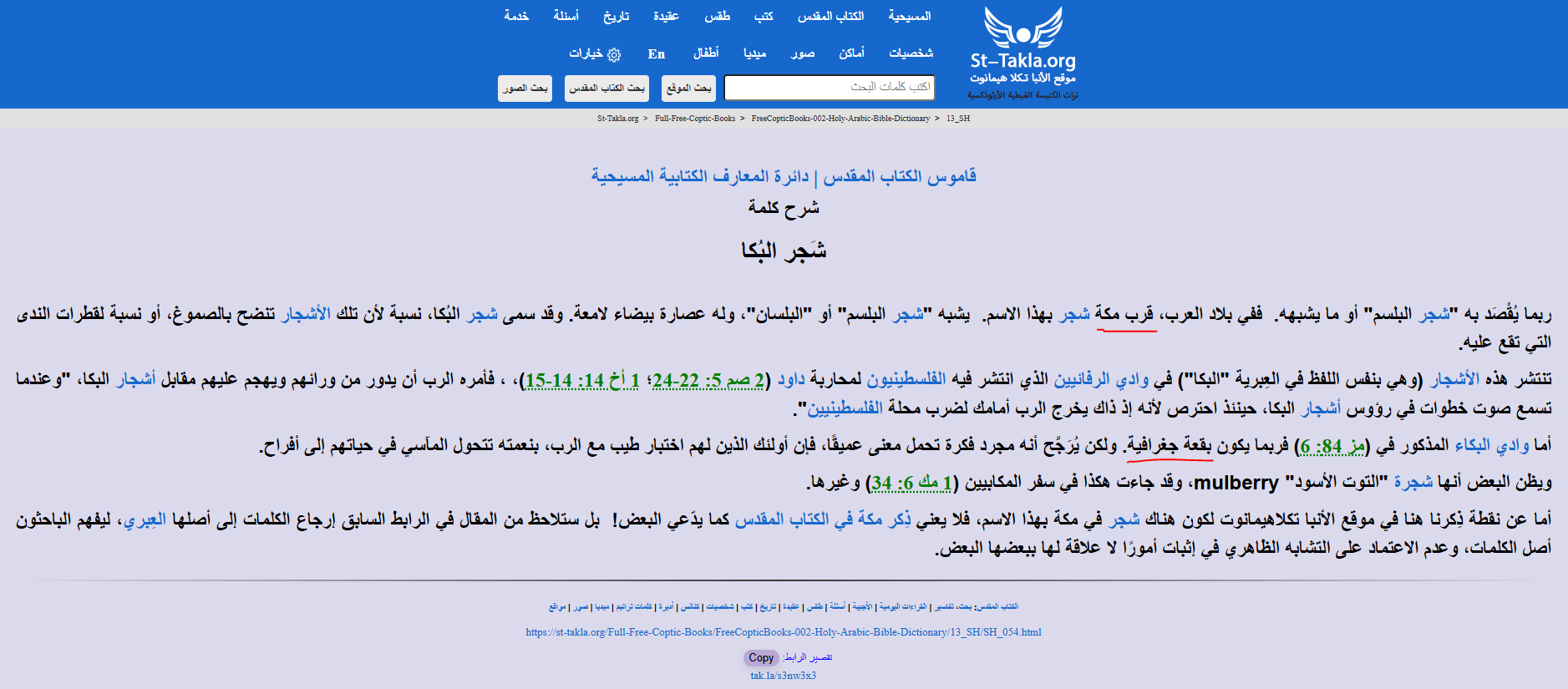
The entry reads: قرب مكة - near Mecca. The dictionary identifies the Valley of Becca (وادي البكاء) as بقعة جغرافية - an actual geographic location - and that location is Mecca.
Within the same dictionary, an entry for the Valley of Al-Rafa'eyyeen describes it as a valley known for its rich and fertile soil, lying southwest of Jerusalem (جنوبي غرب أورشليم). Some have attempted to claim that Becca is the same as this valley. But the Psalm itself specifies two things that directly refute this claim:
1 - مكان جاف قاحل - the valley is arid and dry.
2 - يذهب إليه الحجيج - the pilgrims go to it.
Arid and fertile are total opposites. The Valley of Al-Rafa'eyyeen is fertile. Mecca is arid and dry. Mecca fits the description perfectly - it is the dry, arid city of pilgrims, located southwest of Jerusalem.
Why This Matters
The survival of Becca in Psalm 84 is a confirmation from an unexpected direction. The Quran names the Sacred Masjid's location as Becca in 3:96 and as Mecca in 48:24. The Bible preserves the name Becca in a passage explicitly about pilgrimage to the house of God, describing a barren desert valley with a single spring. The geographical, linguistic, and contextual evidence all converge on the same place.
This is not a minor textual curiosity. It is a cross-scriptural confirmation, preserved despite the efforts of those who sought to remove it, that the site God identified as the first house established for humanity - the location of the Hajj pilgrimage commanded in the Quran - is the same location that the Psalms describe pilgrims traveling toward, passing through its famous valley, drawing water from its singular spring.